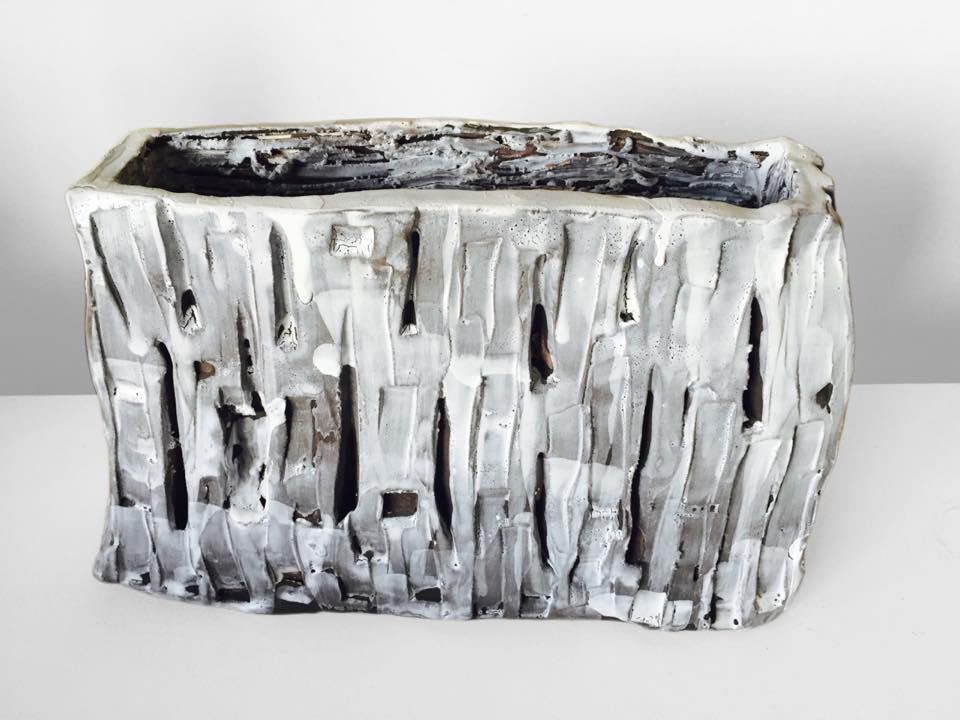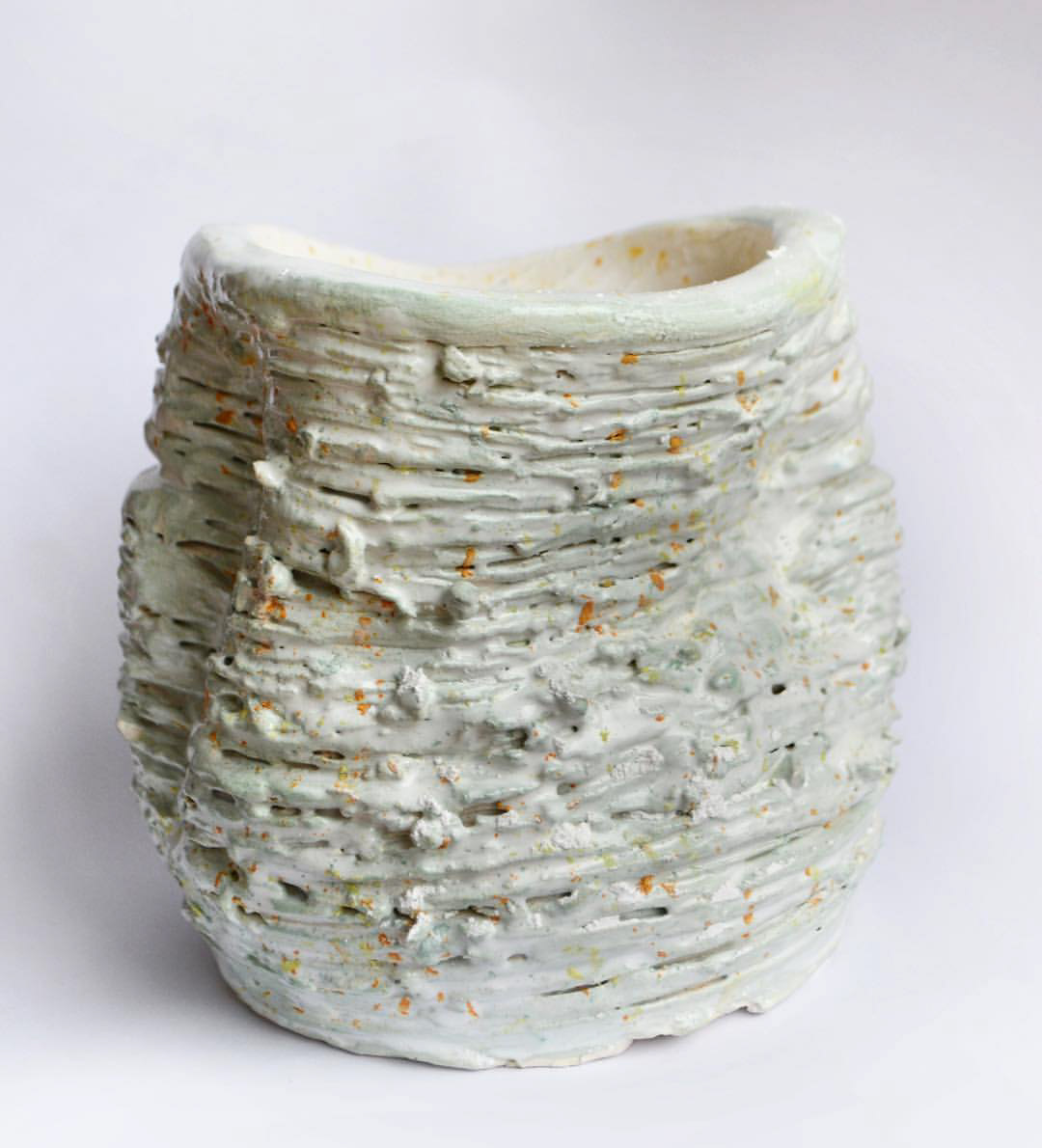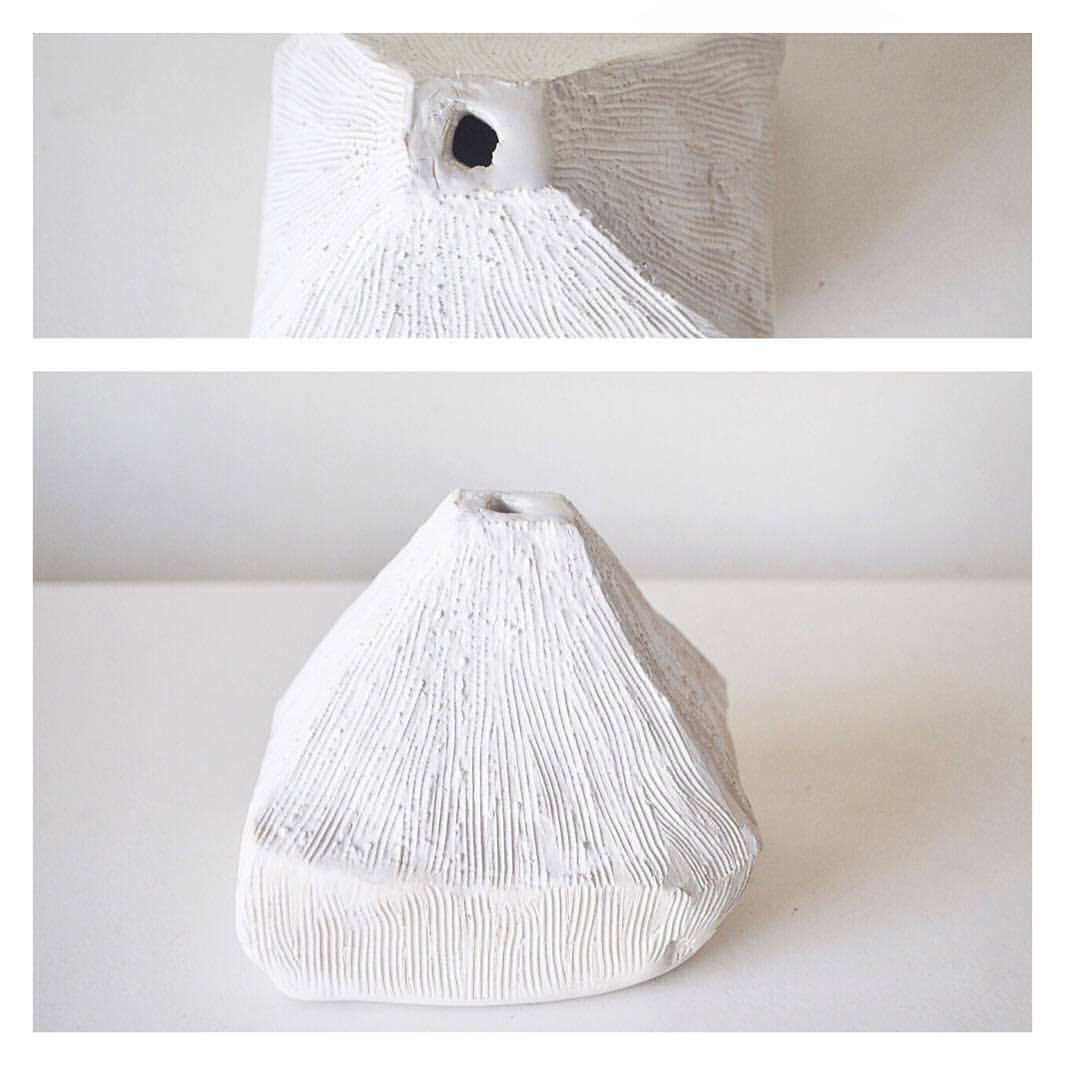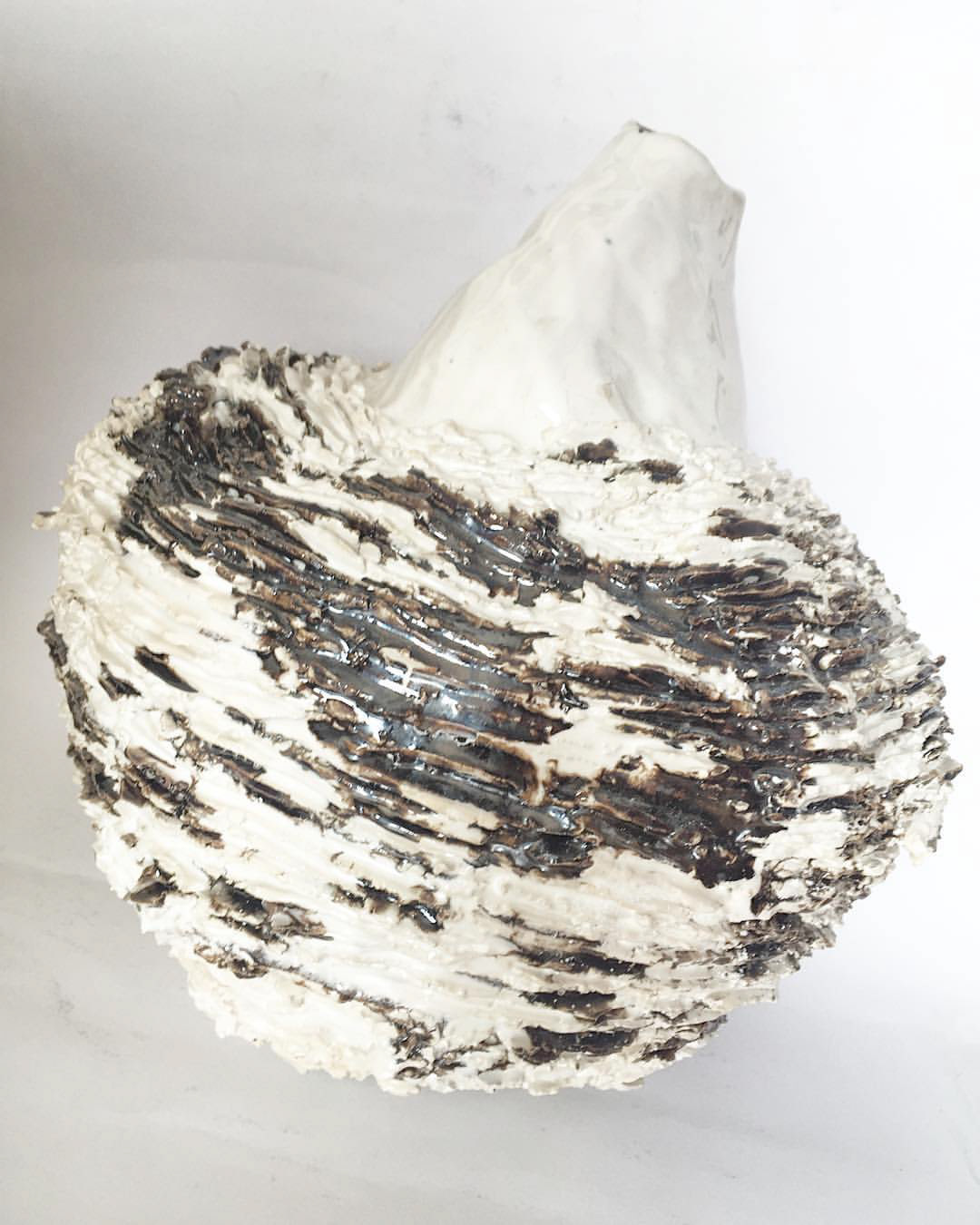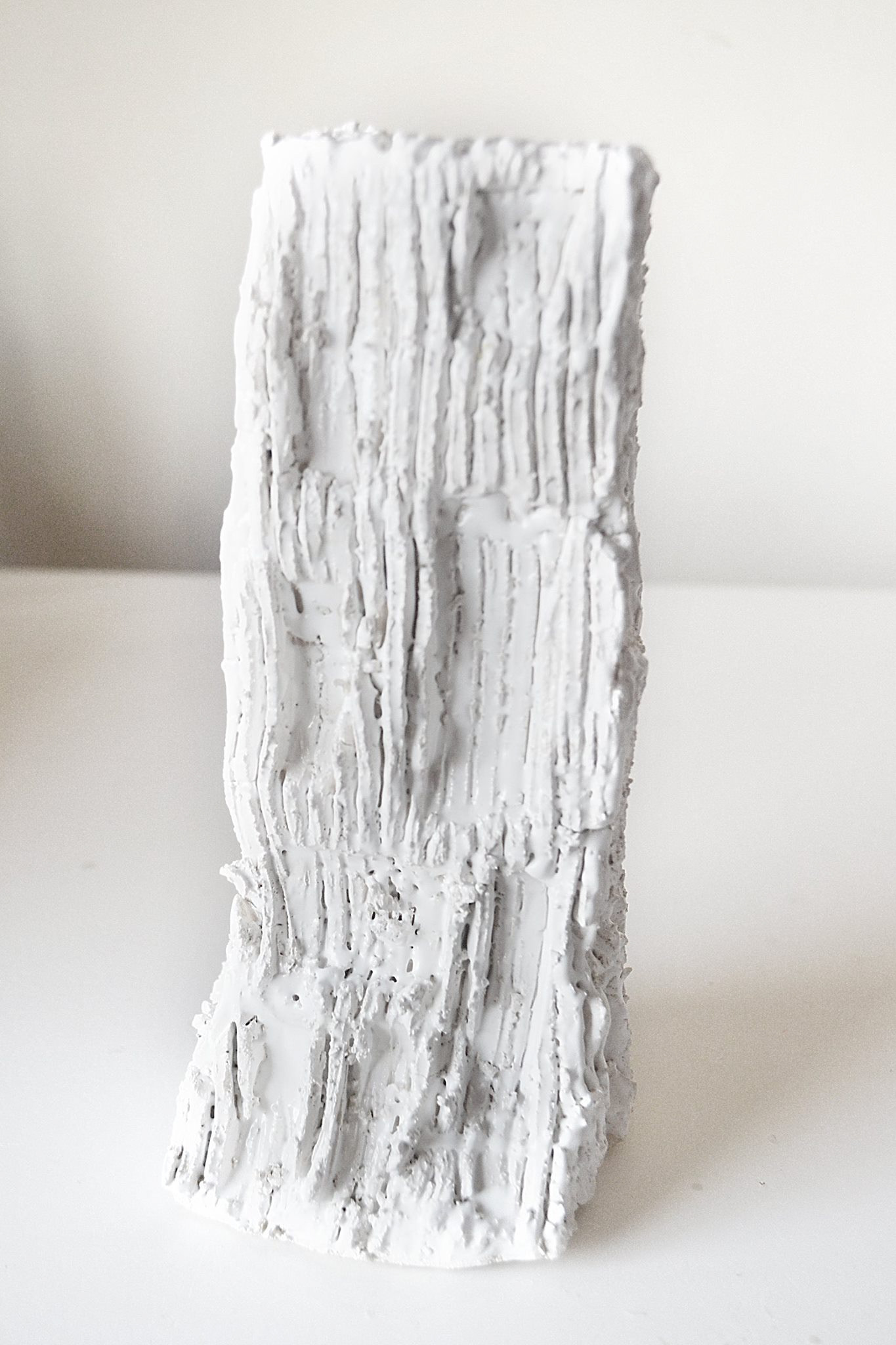
“GESTOS” is a series born from the tension between intention and surrender, a body of work shaped by presence, but never by control. Each piece is built through gestures that sit halfway between consciousness and instinct, allowing the material to speak as loudly as the hand that touches it.
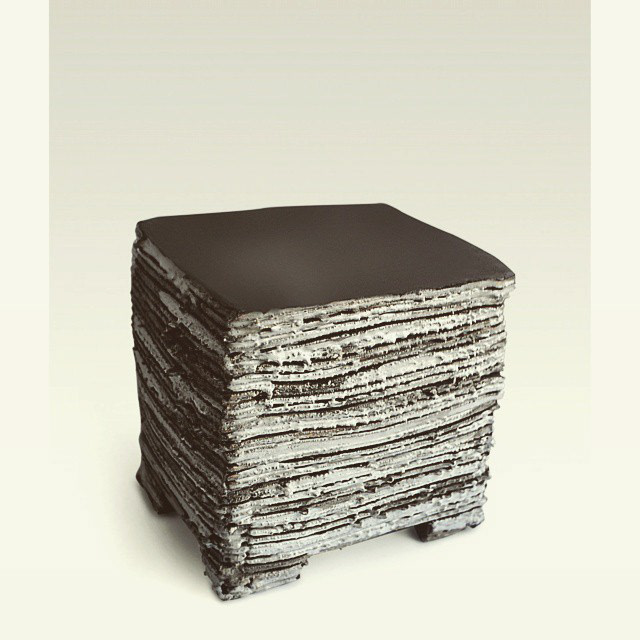
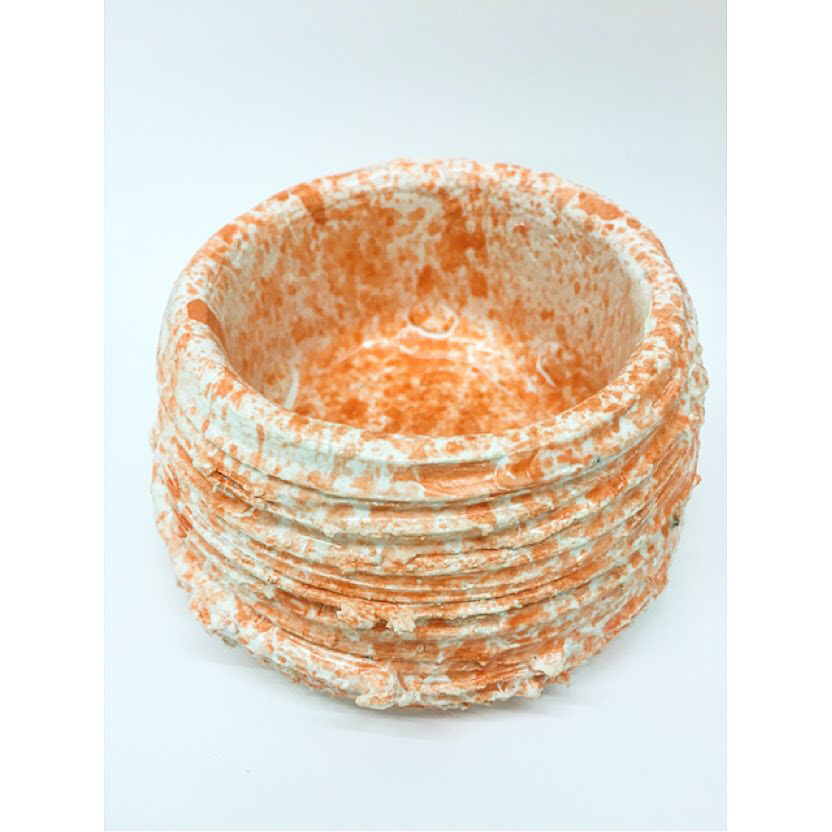
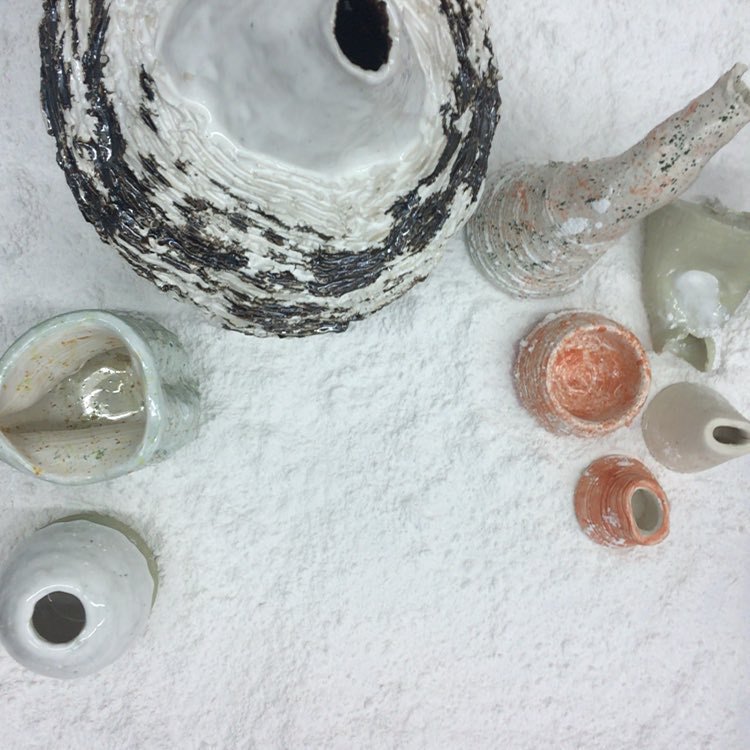
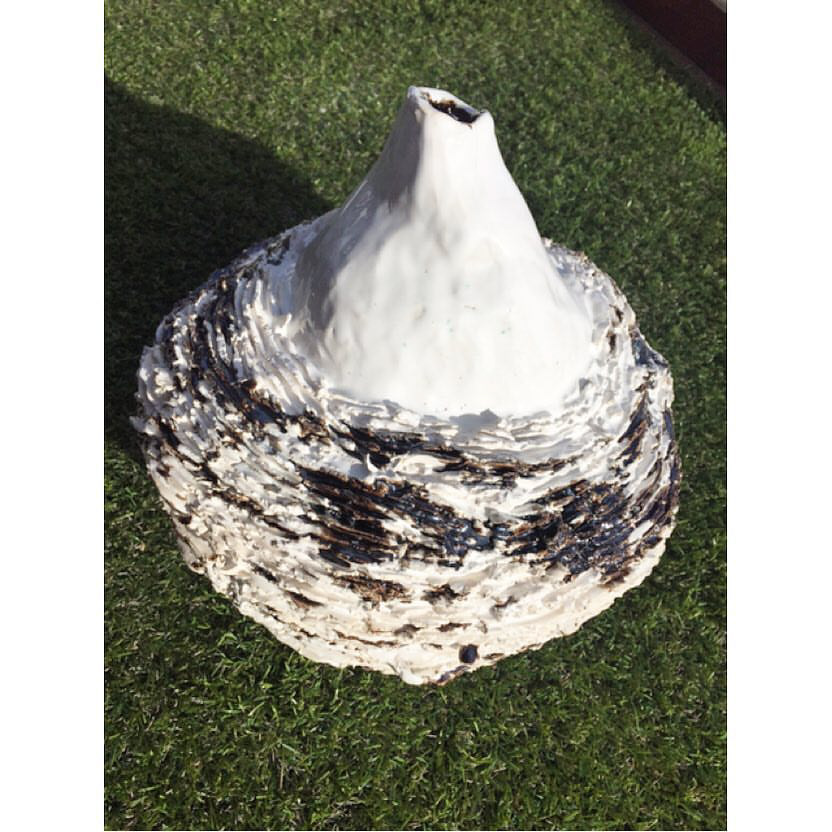
Instead of trying to replicate nature, I tried to work the way nature works: through accumulation, erosion, pressure, sedimentation, lava flows, chance, collapse, and regeneration. The pieces emerge through processes that feel almost geological, layers of clay pushed, dragged, scraped, and coaxed into forms that look as though they could have been carved by wind or sea, melted by heat, or grown organically over time.
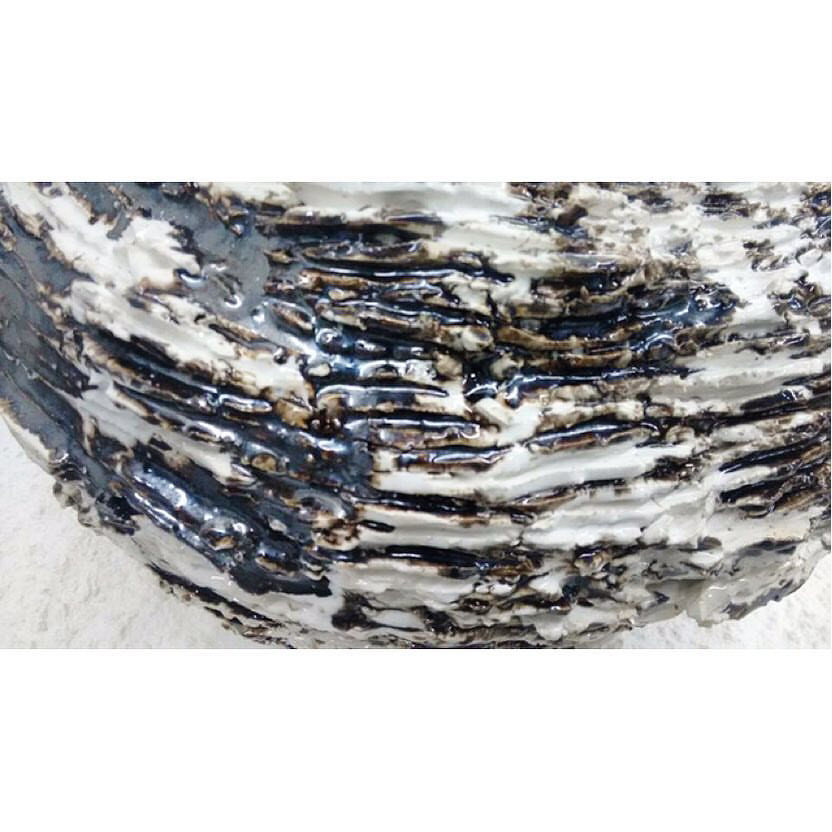
The surfaces hold the memory of every movement.
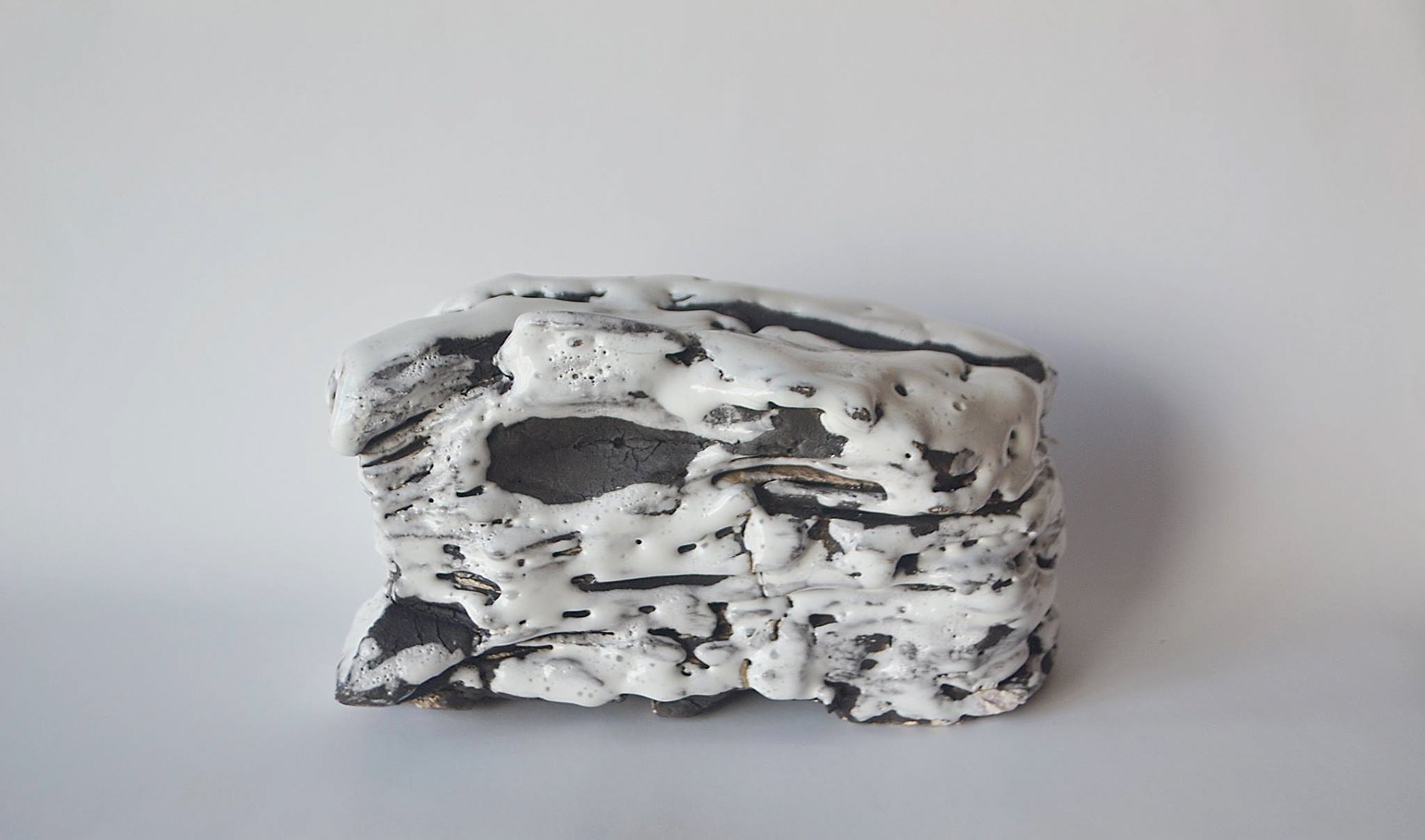
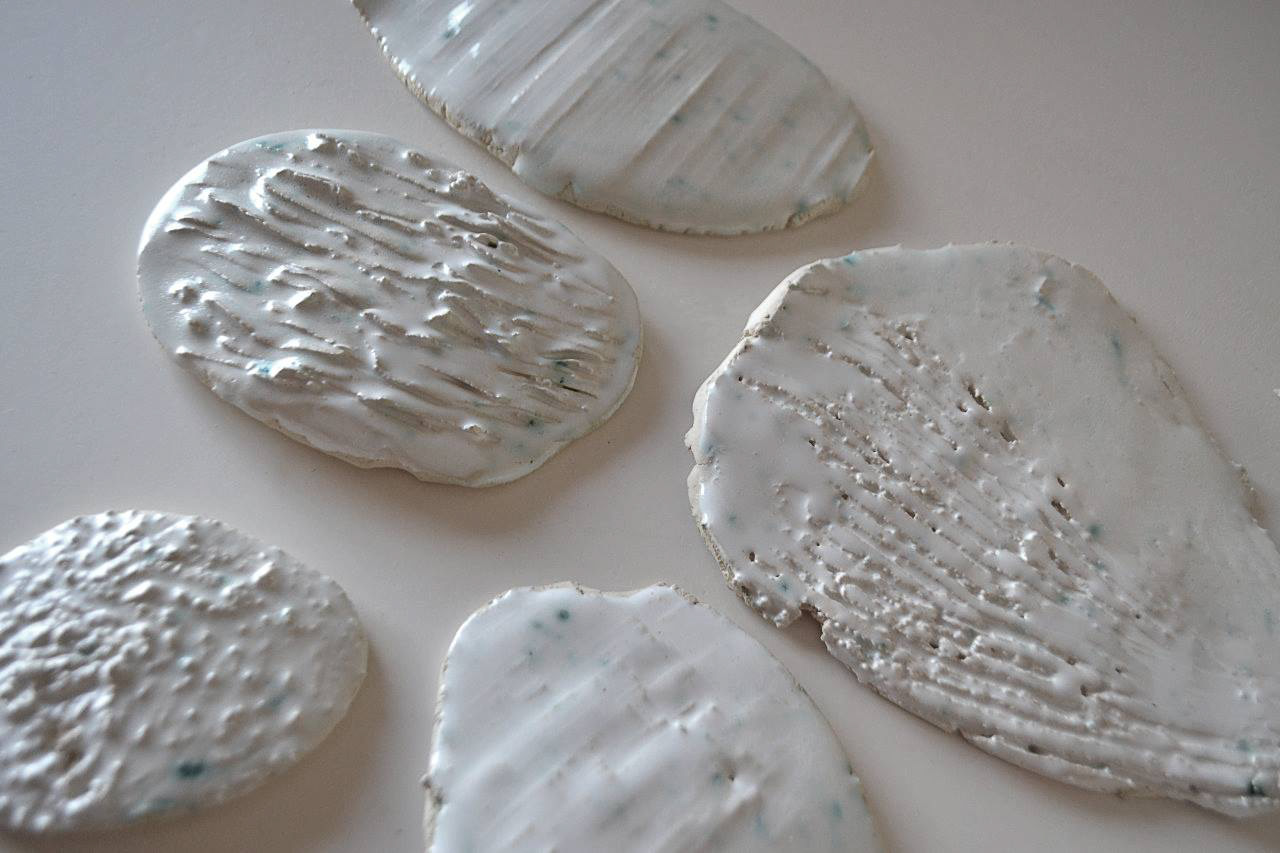
Cracks, ridges, drips, and folds become records of the gesture, not corrections of it.
Glaze settles like snowfall, like ash, like mineral deposits, opaque in some areas, translucent in others, revealing and concealing the structure beneath.
Cracks, ridges, drips, and folds become records of the gesture, not corrections of it.
Glaze settles like snowfall, like ash, like mineral deposits, opaque in some areas, translucent in others, revealing and concealing the structure beneath.
In making this series, I tried to be as unselfconscious as possible. The goal was to be present, rather than precise; to react, rather than plan; to let my hands find their own rhythm without filtering every decision through the intellect. In that sense, the pieces are as much about behaviour as they are about form, about allowing a gesture to unfold and trusting its outcome.
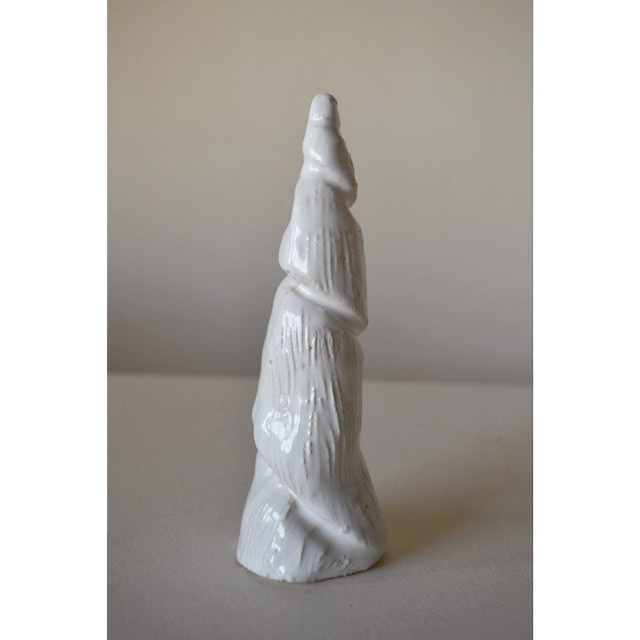
Some works feel stratified, like cliffs or compressed layers of time. Others twist upward like branches, shells, or spirals of smoke. Some slump, melt, or crater. All of them hold a kind of quiet violence, the meeting of structure and unpredictability, balanced with a softness created by glaze and touch.
GESTOS becomes a study of emergence:
How much can I relinquish and still call the result mine?
Where does intention end and accident begin?
And what happens when material, movement, and moment shape each other equally?
How much can I relinquish and still call the result mine?
Where does intention end and accident begin?
And what happens when material, movement, and moment shape each other equally?
This series is an invitation to slow looking, to read surfaces the way you might read landscapes, to sense the rhythm of the hand that made them, and to find beauty in irregularity, incompleteness, and the traces of becoming.